


The sign you already carry.
Before you had a username, you had a sign. Maybe you read your horoscope every morning. Maybe astrology only comes up when a friend blames Mercury, a date asks for your birth time, or a birthday gift calls for something personal. You still know the answer: Aries, Taurus, Gemini, Cancer, Leo, Virgo, Libra, Scorpio, Sagittarius, Capricorn, Aquarius, or Pisces.
That answer is part of everyday language. “Such a Leo” can be praise or a gentle roast. A Cancer pendant can feel more personal than a logo. Two strangers can compare signs before they know each other’s last names. The zodiac gives people twelve familiar ways to talk about character, compatibility, timing, and themselves.
Most symbols with that reach belong to a company, country, or institution. The zodiac is different. It lives in birth charts and newspaper columns, on necklaces and dating profiles, in group chats and memes. It travels because people carry it.
The internet made the signs easier to share, but most digital expressions still belong to the place where they appear. A profile badge stays inside one app. A collection can vanish when a platform closes. The image may feel like yours while the platform controls the master list.
In July 2024, the twelve signs gained another form: twelve public digital assets, one for each sign. A Leo can hold Leo. A Taurus can gift Taurus. Each asset can move from one wallet or application to another while its history remains publicly checkable.
A familiar sign can now be held, verified, sent, and carried between apps.
A story that survived every medium.
The twelve-sign zodiac took shape in Babylonian astronomy around the fifth century BCE. Roughly 2,400 years later, you can still name your place in it.
Clay tablets became star maps, manuscripts and printed almanacs. Newspapers gave the zodiac a daily column. Phones put it in your pocket. The twelve names kept arriving.
See the dated historical timeline
The twelve-sign vocabulary survived by moving with people. Public digital assets are its newest form.
Babylon fell. Rome fell. The denarius stopped being money. The twelve outlasted the worlds beneath that timeline. The people who gave us these signs never had tokens to sell.
Attention arrives on a schedule.
The Sun enters Scorpio, and your group chat announces Scorpio season. Birthday posts follow. Then the next sign takes its turn. Twelve seasons a year, with no marketing department needed to move the calendar.
Open your phone’s emoji keyboard. The twelve symbols are already there. They were in Unicode by June 1993. These coins arrived decades after the symbols became part of the language computers share.
The audience also came first. In YouGov’s April 2022 U.S. survey, nine in ten adults picked their sign when shown the twelve.
Every birthday gives someone a fresh reason to care. The chart below records people looking up the signs. Pageviews measure curiosity, never demand for the coins.
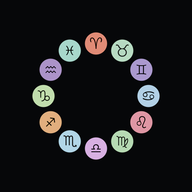
The symbols were in Unicode by June 1993, long before these coins. Glyphs redrawn here in the twelve sign hues.
Interest rises and falls, but the signs keep being read. Daily English Wikipedia reads across all twelve sign articles, August 2025–July 2026. This measures curiosity, not demand for the coins.
Wikimedia user traffic · snapshot fetched 31 Jul 2026 · coloured ticks mark recorded sign changes; diamonds mark eclipses. Calendar markers cover 2026.
Audience & attention evidence
Sources: YouGov, 2022 · Pew Research, 2025 · Tinder, 2026 · Statista (Co-Star)
Bare sign terms are ambiguous in English (cancer the disease, gemini the model), so each bar measures the explicit query, an undercount by design. The reference line is the anchor token's search interest over the same twelve months, set to 1.
Platform figures are editorial estimates from public cumulative hashtag and search-volume data — directional, not measured. Encyclopedia figures are measured; search figures are Google Trends relative interest.
Twelve, not one.
A memecoin is a coin people gather around because of a shared symbol or joke. Its first job is to be remembered. A person can lose the crowd. A news story can expire. Dogecoin reminds you that a joke can endure. The zodiac comes with a calendar that keeps bringing it back.
In the Sun-sign zodiac used here, every birth falls in one of the twelve. You arrive with a place in the story. A meme about a dog is about the dog. A meme about Scorpio is about you.
You can change your job, your city or your username. Your birthday stays with you. That gives a sign a reason to remain personal after the novelty of owning a coin has passed.
Schematic: attention tied to a person, moment or joke can fade. The zodiac renews its subject every season. These curves are illustrative, not measured coin performance.
Illustration · measured Wikipedia reads. No mortality rate or price forecast is implied.
Compare the properties of gold, Bitcoin and Zodiacs
| Property | Gold | ₿Bitcoin | Zodiacs |
|---|---|---|---|
| Millennia of history | Yes | No | Yes |
| Ancient mythology and symbolism | Yes | No | Yes |
| Identity from birth | No | No | Yes |
| Scarcity | Yes | Yes | Yes |
| Fixed supply | No | Yes | Yes |
| Public verification | No | Yes | Yes |
| Digital ownership | No | Yes | Yes |
| Permissionless online transfer | No | Yes | Yes |
| Programmable | No | Yes | Yes |
| Base-layer settlement in seconds | No | No | Yes |
| Built-in monthly cultural seasonality | No | No | Yes |
| Everyday cultural participation | No | No | Yes |
How this comparison is measured
The marks describe the property named by each row. They are not investment ratings.
History and symbolism refer to the cultural subject carried by the asset. For Zodiacs, that subject is the ancient zodiac; the public digital assets date from 2024. Identity from birth means a zodiac sign is culturally assigned from a birth date, not that it verifies anyone’s identity. Built-in monthly cultural seasonality means each sign receives a recurring public season every year. Everyday cultural participation means ordinary people actively use zodiac signs in dating profiles, birthday posts, compatibility discussions, celebrity coverage, memes, and group chats.
Scarcity means availability is constrained. Gold is naturally scarce, but its total stock, reserves, and annual production are estimates rather than a fixed ceiling. Fixed supply means native issuance has a predetermined limit. Bitcoin's limit follows its consensus rules; the listed Zodiacs supplies and renounced mint authorities are published in the registry and dated disclosure. Other people can create assets with the same names.
Public verification means supply and transfer history can be checked on a public ledger. Digital ownership means control through a cryptographic wallet. Permissionless online transfer means an owner can send the asset on its native network without project approval. Programmable means software can apply rules to the asset; Bitcoin provides Script, while Zodiacs uses its listed token standards, open registry, and SDK.
Base-layer settlement in seconds compares native settlement. Bitcoin Lightning and wrapped gold are separate layers. Zodiacs uses Solana as its native rail.
Sources: World Gold Council’s estimate · USGS Mineral Commodity Summaries · BIP 42 · Bitcoin developer guide · Solana’s fee guide · Tinder, 2026 · registry · disclosure record
A gift you can keep.
Imagine sending a friend Leo for her birthday, with a note only she would understand. She holds it in her own wallet. If she changes to another compatible wallet app, she still has the same Leo. The gift does not belong to the app that displayed it.
You can copy a lion picture as often as you like. Sending these units moves them out of your wallet and into hers. Copying the symbol cannot create more of the asset. Its published address tells her exactly which Leo she received.
Even their creator can’t make more of the original coins.
See the supply and ownership records
The issuer gave up the native assets’ minting and freezing permissions. No project treasury is reported. Pool shares were burned, with the recorded amounts printed below. Holders can still sell; these rules do not protect the price.
Native Solana assets: no minting or freezing permission remains. Burned pool shares cannot be redeemed; burns are not uniformly complete. Dotted rows report a burn without a percentage.
Committed disclosure · authorities: 23 Jul 2026 · pool shares and treasury: 14 Jul 2026 · every sign’s receipt
See the network definitions and sources
The native digital assets use Solana token standards. The registry also lists official Base representations connected through Wormhole contracts. Network fees, confirmation behavior, and bridge assumptions are documented in the technical appendix and dated disclosure.
Solana fees · Solana confirmation · Zodiacs registry · disclosures
Drag to browse · Choose a sign to open.
Two years in the open.
The twelve were created on 5 July 2024. Public trading was documented the next day. The record soon became less flattering: concentration was challenged, and the archive later recorded “dead bag” criticism.
On 17 February 2025, Dave Portnoy bought this Libra while trying to buy an unrelated token with the same name. He told his followers exactly what had happened:
Anybody wanna buy some fake Libra? Warning. This is a meme coin. I bought it by accident. It will be volatile. It will eventually go to zero.
Dave Portnoy · @stoolpresidente · 17 Feb 2025 · the address he posted matches the registry, character for character
Anyone can launch another Leo tomorrow. They cannot give it this Leo’s creation date or the transactions that followed. A familiar name can be copied. A public past has to be lived. That history gives these particular twelve a claim. It does not guarantee acceptance.
Creation, criticism and an accidental purchase belong in the same history. The “dead bag” entry has a search link rather than an individual post receipt.
Public-history register · reviewed 31 Jul 2026. Events are spaced equally, not to a time scale.
See the complete dated history
Receipts for every node: /thesis/thesis-history.json
Every public milestone is tied to a source and capture time in the evidence register.
The next medium is ownership.
A gold ring can pass from your grandmother to you without anyone promising a dividend. Gold became a store of value because people kept valuing it and its supply was hard to expand. Its long monetary history came before Bitcoin made scarce digital ownership transferable without a central issuer. Neither metal nor code makes value automatic. Other people must keep accepting it.
For the twelve to follow that path, people would have to choose these assets, keep them through quiet seasons, and be able to exchange them when needed. Ownership would need to spread beyond the same few wallets. The candidacy scoreboard and preregistered test measure early steps toward that possibility. A fixed supply makes the claim possible; lasting acceptance would make it real. The zodiac has survived. These coins still have to earn that trust.
The twelve have been passed from hand to hand for two and a half thousand years. For the first time, one of them can be yours in a way you can prove, give, and carry anywhere. You already know which one it is.
Evidence & disclosuresDefinitions, tests, risks, and complete receipts
What still has to be earned.
No one appointed these digital assets “official,” and this registry has no authority to make them so. The only meaningful kind of standing is chosen standing: independent people and builders using these assets when they could use anything else.
The latest snapshot is mixed, and mostly early. The markets and archive are still present. Independent adoption has not arrived. Holder concentration has not improved. That is not a verdict; it is the starting score.
The strict rule is simple: friends, paid campaigns, operator-owned apps, and operator-controlled wallets do not count as outside adoption. Only strangers count.
No qualifying outside app integration found in the defined search.
No qualifying editorial use of the listed asset addresses found.
The first snapshots became slightly more concentrated, not less.
All twelve tracked pools were live, and the project archive remained continuous.
Open the dated candidacy scoreboard
The candidacy is judged on these. The same list defines the loss condition.
These criteria work both ways. If another set earns stronger independent use, the same evidence should favor it. If these assets fail to spread beyond their origin, the claim fails with them.
Three questions, one honest test.
It is easy to say people would hold their signs if crypto were simpler. So the complexity will be removed: one tap, clear language, and no need to understand a blockchain first. Then three ordinary questions decide what happened.
The thresholds and deadline were published before the test began. All three must pass for a success. The result will be published even if the answer is no. A thesis that cannot lose is not a thesis.
See the preregistered thresholds and verdict rule
What you would actually hold.
A beautiful name can still be attached to a badly designed token. So the basic facts should be understandable before anyone reaches a block explorer. Here is the plain-language snapshot; the full sign-by-sign table and every available receipt remain directly below it.
Roughly one billion units per sign.
All twelve recorded mint authorities are renounced.
All twelve recorded freeze authorities are renounced.
The ten largest token accounts still hold a meaningful share.
Native on Solana, with matching bridged representations on Base.
The published instrument reports no project treasury.
Open the complete sign-by-sign disclosure
| Sign | Supply | Mint authority | Freeze authority | Top-10 holders | Liquidity | Bridge | Treasury / insider | Continuity |
|---|---|---|---|---|---|---|---|---|
Aries | 999,678,206.507775 total as of 2026-07-23 Verify ↗ | renounced as of 2026-07-23 Verify ↗ | renounced as of 2026-07-23 Verify ↗ | 28.4% · top-10 token accounts as of 2026-07-14 Verify ↗ | 7.8% of supply · Raydium pool · LP 99.99% burned as of 2026-07-14 Verify ↗ | Wormhole BridgeToken · lock-and-mint from Solana as of 2026-07-14 Verify ↗ | none · no project treasury; supply is in circulation as of 2026-07-14 Verify ↗ | Astrofolio at zodiacs.org/astrofolio · the official consumer collection experience as of 2026-08-23 Verify ↗ |
Taurus | 999,971,189.731233 total as of 2026-07-23 Verify ↗ | renounced as of 2026-07-23 Verify ↗ | renounced as of 2026-07-23 Verify ↗ | 25.7% · top-10 token accounts as of 2026-07-14 Verify ↗ | 7.2% of supply · Raydium pool · LP 99.51% burned as of 2026-07-14 Verify ↗ | Wormhole BridgeToken · lock-and-mint from Solana as of 2026-07-14 Verify ↗ | none · no project treasury; supply is in circulation as of 2026-07-14 Verify ↗ | Astrofolio at zodiacs.org/astrofolio · the official consumer collection experience as of 2026-08-23 Verify ↗ |
Gemini | 999,873,367.999639 total as of 2026-07-23 Verify ↗ | renounced as of 2026-07-23 Verify ↗ | renounced as of 2026-07-23 Verify ↗ | 23.0% · top-10 token accounts as of 2026-07-14 Verify ↗ | 6.4% of supply · Raydium pool · LP 99.98% burned as of 2026-07-14 Verify ↗ | Wormhole BridgeToken · lock-and-mint from Solana as of 2026-07-14 Verify ↗ | none · no project treasury; supply is in circulation as of 2026-07-14 Verify ↗ | Astrofolio at zodiacs.org/astrofolio · the official consumer collection experience as of 2026-08-23 Verify ↗ |
Cancer | 999,937,516.717043 total as of 2026-07-23 Verify ↗ | renounced as of 2026-07-23 Verify ↗ | renounced as of 2026-07-23 Verify ↗ | 25.9% · top-10 token accounts as of 2026-07-14 Verify ↗ | 8.1% of supply · Raydium pool · LP 95.94% burned as of 2026-07-14 Verify ↗ | Wormhole BridgeToken · lock-and-mint from Solana as of 2026-07-14 Verify ↗ | none · no project treasury; supply is in circulation as of 2026-07-14 Verify ↗ | Astrofolio at zodiacs.org/astrofolio · the official consumer collection experience as of 2026-08-23 Verify ↗ |
Leo | 999,790,982.940979 total as of 2026-07-23 Verify ↗ | renounced as of 2026-07-23 Verify ↗ | renounced as of 2026-07-23 Verify ↗ | 26.8% · top-10 token accounts as of 2026-07-14 Verify ↗ | 8.1% of supply · Raydium pool · LP 92.04% burned as of 2026-07-14 Verify ↗ | Wormhole BridgeToken · lock-and-mint from Solana as of 2026-07-14 Verify ↗ | none · no project treasury; supply is in circulation as of 2026-07-14 Verify ↗ | Astrofolio at zodiacs.org/astrofolio · the official consumer collection experience as of 2026-08-23 Verify ↗ |
Virgo | 999,981,708.827609 total as of 2026-07-23 Verify ↗ | renounced as of 2026-07-23 Verify ↗ | renounced as of 2026-07-23 Verify ↗ | 27.5% · top-10 token accounts as of 2026-07-14 Verify ↗ | 7.6% of supply · Raydium pool · LP burned as of 2026-07-14 Verify ↗ | Wormhole BridgeToken · lock-and-mint from Solana as of 2026-07-14 Verify ↗ | none · no project treasury; supply is in circulation as of 2026-07-14 Verify ↗ | Astrofolio at zodiacs.org/astrofolio · the official consumer collection experience as of 2026-08-23 Verify ↗ |
Libra | 999,795,184.454504 total as of 2026-07-23 Verify ↗ | renounced as of 2026-07-23 Verify ↗ | renounced as of 2026-07-23 Verify ↗ | 27.1% · top-10 token accounts as of 2026-07-14 Verify ↗ | 9.5% of supply · Raydium pool · LP 99.42% burned as of 2026-07-14 Verify ↗ | Wormhole BridgeToken · lock-and-mint from Solana as of 2026-07-14 Verify ↗ | none · no project treasury; supply is in circulation as of 2026-07-14 Verify ↗ | Astrofolio at zodiacs.org/astrofolio · the official consumer collection experience as of 2026-08-23 Verify ↗ |
Scorpio | 999,991,345.402552 total as of 2026-07-23 Verify ↗ | renounced as of 2026-07-23 Verify ↗ | renounced as of 2026-07-23 Verify ↗ | 25.9% · top-10 token accounts as of 2026-07-14 Verify ↗ | 7.7% of supply · Raydium pool · LP burned as of 2026-07-14 Verify ↗ | Wormhole BridgeToken · lock-and-mint from Solana as of 2026-07-14 Verify ↗ | none · no project treasury; supply is in circulation as of 2026-07-14 Verify ↗ | Astrofolio at zodiacs.org/astrofolio · the official consumer collection experience as of 2026-08-23 Verify ↗ |
Sagittarius | 999,521,024.640334 total as of 2026-07-23 Verify ↗ | renounced as of 2026-07-23 Verify ↗ | renounced as of 2026-07-23 Verify ↗ | 28.7% · top-10 token accounts as of 2026-07-14 Verify ↗ | 7.8% of supply · Raydium pool · LP burned as of 2026-07-14 Verify ↗ | Wormhole BridgeToken · lock-and-mint from Solana as of 2026-07-14 Verify ↗ | none · no project treasury; supply is in circulation as of 2026-07-14 Verify ↗ | Astrofolio at zodiacs.org/astrofolio · the official consumer collection experience as of 2026-08-23 Verify ↗ |
Capricorn | 999,981,653.290163 total as of 2026-07-23 Verify ↗ | renounced as of 2026-07-23 Verify ↗ | renounced as of 2026-07-23 Verify ↗ | 30.6% · top-10 token accounts as of 2026-07-14 Verify ↗ | 7.5% of supply · Raydium pool · LP burned as of 2026-07-14 Verify ↗ | Wormhole BridgeToken · lock-and-mint from Solana as of 2026-07-14 Verify ↗ | none · no project treasury; supply is in circulation as of 2026-07-14 Verify ↗ | Astrofolio at zodiacs.org/astrofolio · the official consumer collection experience as of 2026-08-23 Verify ↗ |
Aquarius | 999,986,388.643285 total as of 2026-07-23 Verify ↗ | renounced as of 2026-07-23 Verify ↗ | renounced as of 2026-07-23 Verify ↗ | 24.7% · top-10 token accounts as of 2026-07-14 Verify ↗ | 7.4% of supply · Raydium pool · LP 99.99% burned as of 2026-07-14 Verify ↗ | Wormhole BridgeToken · lock-and-mint from Solana as of 2026-07-14 Verify ↗ | none · no project treasury; supply is in circulation as of 2026-07-14 Verify ↗ | Astrofolio at zodiacs.org/astrofolio · the official consumer collection experience as of 2026-08-23 Verify ↗ |
Pisces | 999,916,083.804386 total as of 2026-07-23 Verify ↗ | renounced as of 2026-07-23 Verify ↗ | renounced as of 2026-07-23 Verify ↗ | 28.9% · top-10 token accounts as of 2026-07-14 Verify ↗ | 7.1% of supply · Raydium pool · LP burned as of 2026-07-14 Verify ↗ | Wormhole BridgeToken · lock-and-mint from Solana as of 2026-07-14 Verify ↗ | none · no project treasury; supply is in circulation as of 2026-07-14 Verify ↗ | Astrofolio at zodiacs.org/astrofolio · the official consumer collection experience as of 2026-08-23 Verify ↗ |
| All twelve · aggregate | 11,998,424,652.959502 total as of 2026-07-23 | 12 of 12 renounced as of 2026-07-23 | 12 of 12 renounced as of 2026-07-23 | lowest 23.0% – highest 30.6% as of 2026-07-14 | 6.4–9.5% per sign · Raydium pools · LP ≥92% burned as of 2026-07-14 Verify ↗ | 12 Wormhole BridgeToken contracts · lock-and-mint from Solana as of 2026-07-14 Verify ↗ | none · no project treasury; supply is in circulation as of 2026-07-14 Verify ↗ | Astrofolio at zodiacs.org/astrofolio · the official consumer collection experience as of 2026-08-23 Verify ↗ |
Last updated: 2026-08-23
Each figure above is published with its definition, its date, and its verification status. No adverse figure is omitted. Concentration is usually unflattering early, and it is printed anyway.
Market context and risk.
Zodiacs are transferable digital assets. Prices can move with attention, liquidity, concentration, and broader market conditions. The registry publishes the relevant relationships and receipts here.
Official status
The registry documents twelve listed digital assets; no institution appointed them as an official zodiac standard. Candidacy is measured through the published adoption criteria above.
Operator relationships
Astrofolio is the official Zodiacs.org consumer collection experience at zodiacs.org/astrofolio; Astrofolio.xyz redirects there rather than operating as a separate app. Because the page is operator-controlled, the conservative methodology still excludes it from independent-adoption counts.
Market risk
Zodiacs are transferable digital assets. Zodiac history does not remove price, liquidity, concentration, bridge, or broader market risk. The registry promises no yield, buyback, price, or roadmap.
Astrology market context
Source-labeled figures from Allied Market Research, Sensor Tower, and Axios describe astrology products and audiences. They are kept separate from ownership of the twelve digital assets.
Verification
Each instrument row links to a receipt or carries an operator-attested or pending label. If page copy and a receipt disagree, use the receipt.
Appendix — the technical record.
Definitions, source methods, and verification paths for the public record.
Reading the instrument.
The column legend for the complete instrument table:
- Supply — total and circulating, per sign
- Mint authority — status per sign (retained / renounced), address if retained
- Freeze authority — status per sign
- Holder concentration — top-10 wallet share per sign, dated
- Liquidity — venue, pool addresses, LP ownership and any locks
- Bridge — mechanism for Base representations, custody model, what fails if the bridge fails
- Treasury and insider holdings — project-controlled wallets, amounts, any lockups or vesting, disposal policy
- Registry continuity — governance of the record itself; what survives if the operating entity disappears (static registry file, forkable SDK, mirrored archive)
Statuses are three-valued and mean what they say: verified (a stranger can check the receipt), operator-attested (the operator states it, dated, not independently verified), pending (neither, and labeled so). Pending is never dressed as verified.
Why Solana. Why Base.
The native digital assets were deployed on Solana. The relevant selection factors are technical and practical: transaction cost, confirmation behavior, consumer wallet availability, existing liquidity venues, and the operator's existing infrastructure at deployment time. Official bridged representations extend each sign to Base through the Wormhole lock-and-mint contracts listed per sign in the instrument. The Base representations trace to the specified Solana mints through those bridge contracts, and their validity depends on the bridge's stated contracts and trust assumptions. If the bridge fails, the native Solana assets stand unaffected; the bridged representations are conveniences, not the native assets.
Methodology and evidence.
The Pulse reads open sources on a published schedule: encyclopedia pageviews from the Wikimedia API (live, with a weekly committed snapshot as fallback) and search interest from public Trends data, with the comparison set and its limits stated inline. Pageviews measure curiosity, not bids; the essay never uses them as demand.
The candidacy scoreboard and the one-tap test read their committed JSON registers, which carry measurement definitions, capture times, exclusions, and raw captures in the published evidence file. Every observation carries an independence classification (unsolicited-unaffiliated, unsolicited-unknown, prompted, campaign, affiliated) and an economic-interest classification; only unsolicited-unaffiliated observations count toward pass conditions, and each exclusion decision is recorded. The public-history events in Part V carry the same schema — post identifiers, capture times, artifact grades A–E, live/deleted status — in the same register family. The test is preregistered: criteria, cohort, thresholds, and dates were fixed and published before the test began, and the result publishes either way.
Verify it yourself.
Each instrument row links to an independently checkable receipt, or is labeled operator-attested or pending. Mint addresses and origin transactions are on a public explorer; pool and holder data are on chain; the registry file is at /registry/zodiacs.registry.json; the SDK reads it all programmatically. The disclosure register carries the operator statements. If a claim on this page and a receipt ever disagree, the receipt wins, and the page is wrong until corrected.