



People · sourced chart

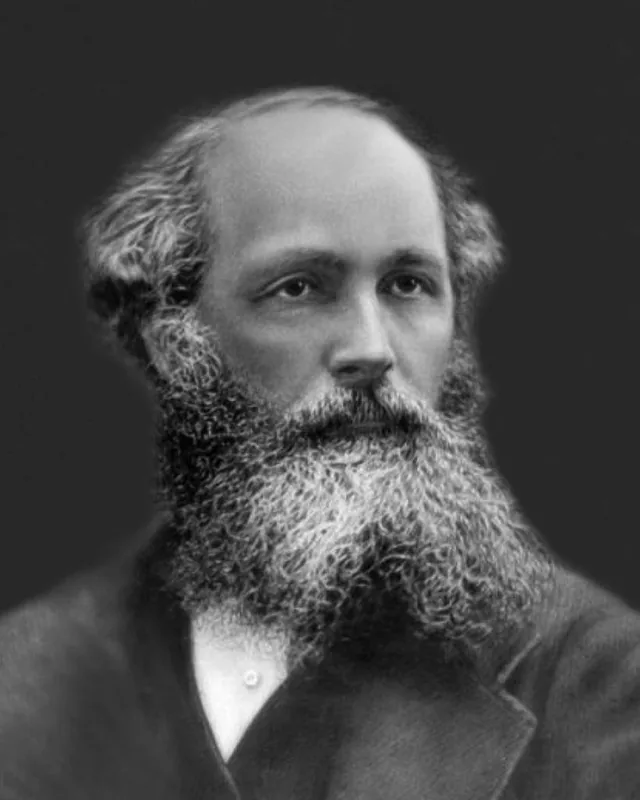
James Clerk Maxwell
Physicist and photographer · United Kingdom · 1831–1879
Birth date sourced. Birth time unknown.Moon sign undetermined. The Moon crossed from Cancer into Leo during that day. Everything below uses only what the complete civil day settles.
The day, read honestly
The chart's headline is a trine: the Sun and Jupiter within 0.7°, identity wired to expansion. The scheme reads trines as water finding its level: effortless, and invisible to the person living it.
Positions at 12:00 civil time in Edinburgh—a reference instant, not a birth time. No houses, rising sign, angles, or sect were computed.
Where the Sun actually stood
The Sun sits at 21.7° Gemini — the third decan, 20°–30°, which the tradition sub-rules by Saturn. Degrees matter more than the sign label here: two people born a fortnight apart share Gemini and share almost nothing else about where the Sun actually stood.
The fast planets
Day to day the chart speaks through Mercury in Gemini (1.2°), Venus in Leo (2.1°), Mars in Cancer (25.5°): a mind at home in argument and pattern, taste that runs toward the vivid and the immediate, drive that moves on certainty and current.
The angles that hold
The day's firmest angle joins the Sun and Jupiter — a trine holding at 0.7°. The scheme reads trines as water finding its level: effortless, and invisible to the person living it. Behind it, Mercury sextile Venus at 0.9°, and Mars opposition Neptune at 1.1° — both still well inside the orbs this site uses. These are the day-proof angles — present at midnight, present at noon, present at the next midnight.
Figures in the geometry
The Moon stands apart from every major angle the day held — the tradition reads an unaspected planet as a voice that speaks on its own schedule, unmodulated by the rest of the chart.
The classical map
Of the seven planets the classical scheme judges, three sit in a sign it has an opinion about. Mercury in Gemini at 1.2° is in domicile — the planet in its own sign, running on home rules; Mars in Cancer at 25.5° is in fall — the tradition’s uphill placement, strength earned rather than given; Saturn in Leo at 26.8° is in detriment — the planet opposite its home, working against the grain. Condition, not character: that is all the dignity table ever measured.
The shape of the whole
Counting only the 9 placements whose signs hold for the whole day, the chart runs 4 air, 3 fire, 1 water, 1 earth by element and 4 fixed, 3 cardinal, 2 mutable by modality. Jupiter, Uranus and Neptune were retrograde — apparent retreat against the stars, which the old reading takes as a function working from the inside first.
The Moon is genuinely open
The Moon crossed from Cancer into Leo during that day at the birthplace, travelling 14.2° between one midnight and the next. Half the day belongs to each sign, and the split falls at an unrecorded hour — so this page holds the Moon as a genuine unknown.
Where this comes fromSources, revisions, and exactly what this chart assumes
- Source article
- James Clerk Maxwell · revision 1365632977
- Wikidata
- Q9095 · revision 2518558494
- Retrieved
- 2026-07-26T18:47:50.947Z
- Birth date
- 1831-06-13 · day precision · proleptic-gregorian
- Birthplace
- Edinburgh, United Kingdom · Q23436
- Coordinates
- 55.9533, -3.1892 · from Edinburgh
- Reference instant
- 1831-06-13T12:01:15.000Z · noon civil time, not a birth time
- Omitted
- Rising sign, houses, angles, and sect—all require a birth time.
- Unknown-time range
- Moon travelled 14.18° · Moon sign undetermined. The Moon crossed from Cancer into Leo during that day.
- Engine
- astronomy-engine (repository dependency) · @zodiacs/engine/internal/math
- Portrait
- Unknown author · public domain · Wikimedia Commons
Something wrong here?Ask us to correct or remove it.