



People · sourced chart

Alfonsina Storni
Diarist and teacher · Switzerland · 1892–1938
Birth date sourced. Birth time unknown.The Moon remained in Cancer throughout that civil day. Everything below uses only what the complete civil day settles.
The day, read honestly
The Moon stands at 21.6° Cancer, in domicile — the planet in its own sign, running on home rules. Of everything the chart can be read for without a birth time, that is the loudest single fact in it.
Positions at 12:00 civil time in Capriasca—a reference instant, not a birth time. No houses, rising sign, angles, or sect were computed.
Where the Sun actually stood
The Sun's exact place is 8.5° Gemini. That falls in the first decan, 0°–10°, sub-ruled by Mercury in the classical scheme — a air sign read through a mutable season.
The personal registers
Closer in, Mercury stands at 16.6° Taurus; Venus stands at 19.6° Cancer; Mars stands at 9.7° Aquarius. The tradition reads a mind that trusts the measured and the checked from Mercury, taste tuned to mood and undertow from Venus, drive that argues its way forward from Mars.
The angles that hold
Start where the chart is tightest — the Sun conjunction Pluto, 0.2° of separation. The tradition stops reading a conjunction as two things. It is one appetite with two names, and it moves together or not at all. Behind it, the Sun conjunction Neptune at 0.2°, and Neptune conjunction Pluto at 0.4° — both still well inside the orbs this site uses. These are the day-proof angles — present at midnight, present at noon, present at the next midnight.
What the angles build
Uranus stands apart from every major angle the day held — the tradition reads an unaspected planet as a voice that speaks on its own schedule, unmodulated by the rest of the chart.
The classical map
The classical table has one entry for this chart. The Moon in Cancer at 21.6° is in domicile — the planet in its own sign, running on home rules. None of these labels is a verdict on a person; they describe how a function is situated, nothing more.
The shape of the whole
Among the 10 placements whose signs hold for the whole day, the elements divide 4 air, 3 water, 2 earth, 1 fire; by modality, 4 mutable, 3 cardinal, 3 fixed. An air emphasis is read as distance for the sake of clarity: the idea gets examined before it gets adopted. Uranus was retrograde — apparent retreat against the stars, which the old reading takes as a function working from the inside first.
The Moon, and how far it can move
The Moon stayed in Cancer for the whole of that day at the birthplace, covering 13.7° between midnight and midnight. The missing clock moves the Moon by half a sign at most here, and the boundary was never close. At the noon reference it stands at 21.6°.
Where this comes fromSources, revisions, and exactly what this chart assumes
- Source article
- Alfonsina Storni · revision 1363645717
- Wikidata
- Q238557 · revision 2517577940
- Retrieved
- 2026-07-26T18:47:50.947Z
- Birth date
- 1892-05-29 · day precision · proleptic-gregorian
- Birthplace
- Capriasca, Switzerland · Q69043
- Coordinates
- 46.0667, 8.9667 · from Capriasca
- Reference instant
- 1892-05-29T11:30:14.000Z · noon civil time, not a birth time
- Omitted
- Rising sign, houses, angles, and sect—all require a birth time.
- Unknown-time range
- Moon travelled 13.67° · The Moon remained in Cancer throughout that civil day.
- Engine
- astronomy-engine (repository dependency) · @zodiacs/engine/internal/math
- Portrait
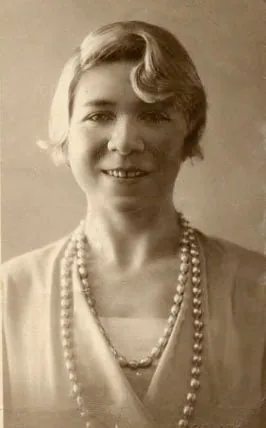
- Unknown author · public domain · Wikimedia Commons
Something wrong here?Ask us to correct or remove it.