



People · sourced chart

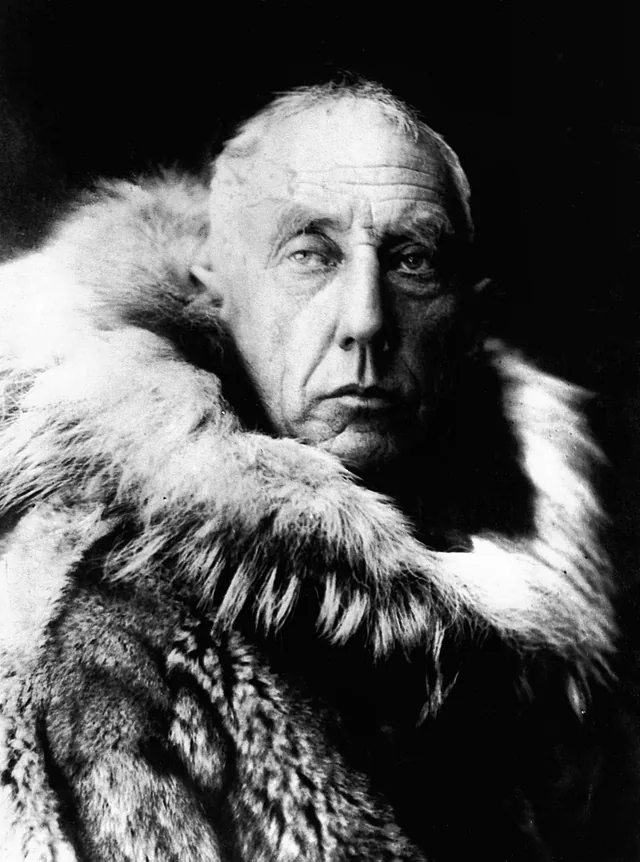
Roald Amundsen
Explorer and writer · Norway · 1872–1928
Birth date sourced. Birth time unknown.Moon sign undetermined. The Moon crossed from Scorpio into Sagittarius during that day. Everything below uses only what the complete civil day settles.
The day, read honestly
Tightest of all, the Sun holds a conjunction to Venus at 0.1° — close enough to weld identity to taste. A conjunction is the least negotiable aspect in the scheme — no distance to argue across, so the pair arrives as a single instinct.
Positions at 12:00 civil time in Borge Municipality—a reference instant, not a birth time. No houses, rising sign, angles, or sect were computed.
Where the Sun actually stood
At the noon reference the Sun sits 24.1° into Cancer — the third decan, which the old scheme hands to Jupiter. Same sign, different decan, different chart.
The personal registers
Closer in, Mercury stands at 15.3° Leo; Venus stands at 24.2° Cancer; Mars stands at 8.1° Cancer. The tradition reads thought that arrives already in motion from Mercury, attraction that works by atmosphere from Venus, effort that surges when it matters from Mars.
The angles that hold
Start where the chart is tightest — the Sun conjunction Venus, 0.1° of separation. Two bodies in the same degree are not read as neighbours but as a merger: whatever one wants, the other is already funding. Behind it, Venus square Neptune at 2.1°, and the Sun square Neptune at 2.1° — both still well inside the orbs this site uses. The unknown hour cannot unmake any of this: every aspect named survived all twenty-five samples of the day.
Figures in the geometry
The Moon makes no major aspect that survives the day; the old reading gives such a planet autonomy — it acts alone, sometimes loudly.
The classical map
The oldest layer of the scheme — seven planets, four conditions — flags two placements in this chart. Mars in Cancer at 8.1° is in fall — the tradition’s uphill placement, strength earned rather than given; Saturn in Capricorn at 17.5° is in domicile — the planet in its own sign, running on home rules. None of this ranks anyone; dignity describes footing, and footing can be worked with.
The shape of the whole
Counting only the 9 placements whose signs hold for the whole day, the chart runs 4 fire, 3 water, 2 earth by element and 5 cardinal, 4 fixed by modality. Fire weights a chart toward initiative — starting, asserting, spending energy to find out what happens. No settled placement falls in air — an absence the tradition treats as information, not as a defect. Saturn was retrograde — the optical reversal the tradition reads as review — energy turned over before it is turned out.
The Moon is genuinely open
The Moon crossed from Scorpio into Sagittarius during that day at the birthplace, travelling 14.0° between one midnight and the next. Without a recorded hour there is no honest way to say which side it was on, so this reading does not say. The Moon sign is a real question here, not a rounding error, and it needs a birth time nobody has published.
Where this comes fromSources, revisions, and exactly what this chart assumes
- Source article
- Roald Amundsen · revision 1361524561
- Wikidata
- Q926 · revision 2522900202
- Retrieved
- 2026-07-26T18:47:50.947Z
- Birth date
- 1872-07-16 · day precision · proleptic-gregorian
- Birthplace
- Borge Municipality, Norway · Q966777
- Coordinates
- 59.2278, 11.0433 · from Borge Municipality
- Reference instant
- 1872-07-16T11:06:32.000Z · noon civil time, not a birth time
- Omitted
- Rising sign, houses, angles, and sect—all require a birth time.
- Unknown-time range
- Moon travelled 14.03° · Moon sign undetermined. The Moon crossed from Scorpio into Sagittarius during that day.
- Engine
- astronomy-engine (repository dependency) · @zodiacs/engine/internal/math
- Portrait
- AnonymousUnknown author · public domain · Wikimedia Commons
Something wrong here?Ask us to correct or remove it.