



People · sourced chart

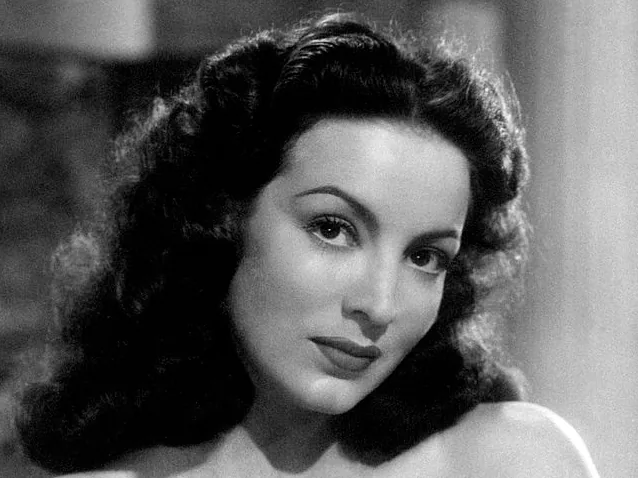
María Félix
Film actor and singer · Mexico · 1914–2002
Birth date sourced. Birth time unknown.Moon sign undetermined. The Moon crossed from Leo into Virgo during that day. Mercury crossed from Aries into Taurus during that day, so its sign is left open. Everything below uses only what the complete civil day settles.
The day, read honestly
Mercury and Pluto sit 0.0° from an exact sextile — near enough that the tradition reads thinking and depth as a single working part. Sextiles are read as standing invitations — productive exactly as often as they are accepted.
Positions at 12:00 civil time in Álamos—a reference instant, not a birth time. No houses, rising sign, angles, or sect were computed.
Where the Sun actually stood
Taurus, but precisely: 13.5°, second decan, 10°–20°, under Mercury in the triplicity scheme. The tradition kept these divisions because thirty degrees is a long street.
Closer to the ground
The personal planets sit Venus at 3.9° Gemini, Mars at 1.5° Leo. Venus in a air sign reads as taste led by wit and proportion; Mars in a fire sign reads as drive that ignites on contact.
The angles that hold
Nothing in the geometry sits closer than Mercury and Pluto: 0.0° from an exact sextile. A sextile is an offer rather than a given: available when it is reached for, quiet when it is not. Behind it, Mercury square Mars at 1.9°, and the Sun square Uranus at 1.9° — both still well inside the orbs this site uses. These are the day-proof angles — present at midnight, present at noon, present at the next midnight.
The standing structure
The day-stable angles form no closed figure. Nothing funnels; each aspect is its own negotiation, which the tradition reads as a chart of separate treaties rather than one campaign.
The classical map
None of the seven classical planets falls in a sign the old scheme marks as strong or stretched. Worth saying plainly rather than leaving out: there is no ready-made verdict from the dignity table here, and the chart’s weight sits in its angles instead.
The shape of the whole
Of the 8 placements whose signs hold for the whole day: 5 in air, 1 in earth, 1 in fire, 1 in water by element, 4 fixed, 3 mutable, 1 cardinal by modality. Air signs carry exchange in the scheme — comparison, argument, the sentence that makes the situation legible. Mercury crossed from Aries into Taurus during that day, so its sign is left open. Nothing here ran retrograde — all ten in direct motion that day.
The Moon is genuinely open
The Moon crossed from Leo into Virgo during that day at the birthplace, travelling 14.0° between one midnight and the next. A birth time would settle it in a second; there isn’t one. So the Moon stays unnamed here — the alternative is a guess wearing the clothes of a fact.
Where this comes fromSources, revisions, and exactly what this chart assumes
- Source article
- María Félix · revision 1350881475
- Wikidata
- Q465189 · revision 2518079373
- Retrieved
- 2026-07-26T18:47:50.947Z
- Birth date
- 1914-05-04 · day precision · proleptic-gregorian
- Birthplace
- Álamos, Mexico · Q250531
- Coordinates
- 27.0242, -108.9350 · from Álamos
- Reference instant
- 1914-05-04T19:23:52.000Z · noon civil time, not a birth time
- Omitted
- Rising sign, houses, angles, and sect—all require a birth time.
- Unknown-time range
- Moon travelled 14.04° · Moon sign undetermined. The Moon crossed from Leo into Virgo during that day.
- Open signs
- Mercury crossed from Aries into Taurus during that day, so its sign is left open.
- Engine
- astronomy-engine (repository dependency) · @zodiacs/engine/internal/math
- Portrait
- Unknown (Mondadori Publishers) · public domain · Wikimedia Commons
Something wrong here?Ask us to correct or remove it.