



People · sourced chart

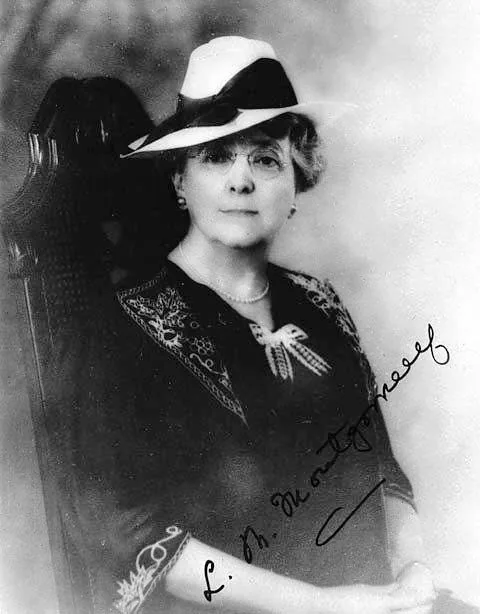
Lucy Maud Montgomery
Writer and teacher · Canada · 1874–1942
Birth date sourced. Birth time unknown.The Moon remained in Virgo throughout that civil day. Everything below uses only what the complete civil day settles.
The day, read honestly
Four of the ten placements whose signs are settled fall in fixed signs, the widest weighting the unknown hour leaves certain. Fixed signs hold the middle of their seasons, and a fixed-heavy chart is read as one that consolidates and does not easily let go.
Positions at 12:00 civil time in Prince Edward Island—a reference instant, not a birth time. No houses, rising sign, angles, or sect were computed.
Where the Sun actually stood
The Sun's exact place is 8.3° Sagittarius. That falls in the first decan, 0°–10°, sub-ruled by Jupiter in the classical scheme — a fire sign read through a mutable season.
The fast planets
Closer in, Mercury stands at 18.1° Scorpio; Venus stands at 21.8° Sagittarius; Mars stands at 16.9° Libra. The tradition reads a mind that absorbs before it argues from Mercury, taste that runs toward the vivid and the immediate from Venus, drive that argues its way forward from Mars.
The angles that hold
The Sun and Saturn hold the closest angle here — a sextile, 1.3° wide. A sixth of the circle is close enough for cooperation and far enough that it stays optional. Behind it, Mars sextile Uranus at 1.7°, and Venus sextile Jupiter at 1.9° — both still well inside the orbs this site uses. Each angle here was measured at every hour of the civil day and held; whatever the missing clock said, this geometry was in it.
The standing structure
Mercury opposes Pluto while both square Uranus. A t-square aims the whole axis at its apex planet; the tradition reads it as the chart’s standing assignment.
The classical map
Of the seven planets the classical scheme judges, two sit in a sign it has an opinion about. Mars in Libra at 16.9° is in detriment — the planet opposite its home, working against the grain; Saturn in Aquarius at 9.6° is in domicile — the planet in its own sign, running on home rules. The old table grades terrain, not talent — a placement in fall works uphill, nothing more.
The shape of the whole
Counting only the 10 placements whose signs hold for the whole day, the chart runs 4 fire, 3 air, 2 earth, 1 water by element and 4 fixed, 3 mutable, 3 cardinal by modality. Venus, Uranus, Neptune and Pluto were retrograde — the optical reversal the tradition reads as review — energy turned over before it is turned out.
The Moon, and how far it can move
The Moon stayed in Virgo for the whole of that day at the birthplace, covering 12.4° between midnight and midnight. Whatever the unrecorded hour was, it happened inside one Moon sign — the degree floats, the sign holds. At the noon reference it stands at 7.3°.
Where this comes fromSources, revisions, and exactly what this chart assumes
- Source article
- Lucy Maud Montgomery · revision 1363619673
- Wikidata
- Q273034 · revision 2521473687
- Retrieved
- 2026-07-26T18:47:50.947Z
- Birth date
- 1874-11-30 · day precision · proleptic-gregorian
- Birthplace
- Prince Edward Island, Canada · Q1978
- Coordinates
- 46.4000, -63.2000 · from Prince Edward Island
- Reference instant
- 1874-11-30T16:14:24.000Z · noon civil time, not a birth time
- Omitted
- Rising sign, houses, angles, and sect—all require a birth time.
- Unknown-time range
- Moon travelled 12.38° · The Moon remained in Virgo throughout that civil day.
- Engine
- astronomy-engine (repository dependency) · @zodiacs/engine/internal/math
- Portrait
- Unknown author · public domain · Wikimedia Commons
Something wrong here?Ask us to correct or remove it.