



People · sourced chart

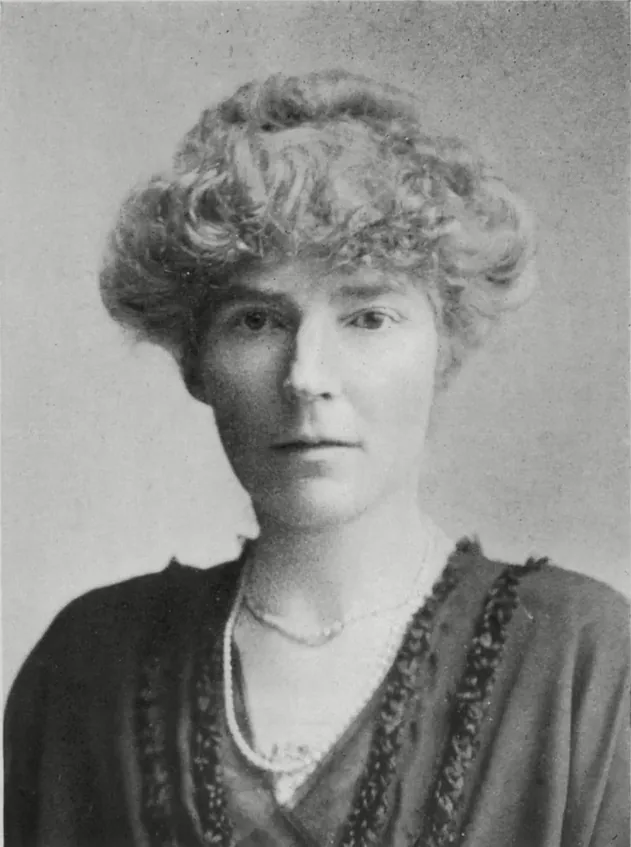
Gertrude Bell
Explorer and archaeologist · United Kingdom · 1868–1926
Birth date sourced. Birth time unknown.The Moon remained in Taurus throughout that civil day. Everything below uses only what the complete civil day settles.
The day, read honestly
Four of the ten placements whose signs are settled stand in Cancer — the Sun, Mercury, Venus and Uranus. The placements whose signs could change with an unknown hour are not counted. A cluster that size becomes the section the rest of the chart plays around.
Positions at 12:00 civil time in Washington—a reference instant, not a birth time. No houses, rising sign, angles, or sect were computed.
Where the Sun actually stood
At noon on that date the Sun stood at 22.2° Cancer, inside the third decan (20°–30°), whose traditional sub-ruler is Jupiter. The decan is the older, finer division — it is what the sign looks like once you stop rounding it to thirty degrees.
The personal registers
Day to day the chart speaks through Mercury in Cancer (22.2°), Venus in Cancer (25.8°), Mars in Gemini (9.1°): thought steeped in tone and memory, attraction that works by atmosphere, effort aimed through strategy and words.
The angles that hold
Closest first: the Sun to Mercury, a conjunction with 0.0° of slack. When two functions occupy one degree, the tradition reads a fusion: neither can act without committing the other. Behind it, Jupiter square Uranus at 0.1°, and Uranus sextile Pluto at 3.2° — both still well inside the orbs this site uses. The unknown hour cannot unmake any of this: every aspect named survived all twenty-five samples of the day.
The standing structure
The Moon makes no major aspect that survives the day; the old reading gives such a planet autonomy — it acts alone, sometimes loudly.
The classical map
Read against the old dignities, one placement stands out. The Moon in Taurus at 9.8° is in exaltation — the tradition’s honoured-guest placement, working at its best. None of this ranks anyone; dignity describes footing, and footing can be worked with.
The shape of the whole
Among the 10 placements whose signs hold for the whole day, the elements divide 5 water, 2 earth, 2 fire, 1 air; by modality, 6 cardinal, 3 fixed, 1 mutable. Water weights a chart toward the felt and the remembered — information that arrives as atmosphere before it arrives as words. Mercury, Venus and Saturn were retrograde — the backward drift a body appears to make as the Earth overtakes it, read in the scheme as a function that reviews before it releases.
The Moon, and how far it can move
The Moon stayed in Taurus for the whole of that day at the birthplace, covering 13.2° between midnight and midnight. Fast enough that its degree is approximate, slow enough that its sign is not in doubt. At the noon reference it stands at 9.8°.
Where this comes fromSources, revisions, and exactly what this chart assumes
- Source article
- Gertrude Bell · revision 1365263165
- Wikidata
- Q231360 · revision 2517532373
- Retrieved
- 2026-07-26T18:47:50.947Z
- Birth date
- 1868-07-14 · day precision · proleptic-gregorian
- Birthplace
- Washington, United Kingdom · Q1018448
- Coordinates
- 54.9000, -1.5200 · from Washington
- Reference instant
- 1868-07-14T12:00:00.000Z · noon civil time, not a birth time
- Omitted
- Rising sign, houses, angles, and sect—all require a birth time.
- Unknown-time range
- Moon travelled 13.19° · The Moon remained in Taurus throughout that civil day.
- Engine
- astronomy-engine (repository dependency) · @zodiacs/engine/internal/math
- Portrait
- Historia/REX/Shutterstock.com (according to Brittanica.com) · public domain · Wikimedia Commons
Something wrong here?Ask us to correct or remove it.