



People · sourced chart

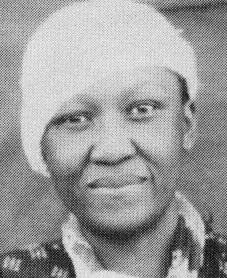
Ellen Kuzwayo
Politician and autobiographer · South Africa · 1914–2006
Birth date sourced. Birth time unknown.The Moon remained in Virgo throughout that civil day. Everything below uses only what the complete civil day settles.
The day, read honestly
Four of the ten placements whose signs are settled stand in Cancer — the Sun, Mercury, Neptune and Pluto. The placements whose signs could change with an unknown hour are not counted. A cluster that size becomes the section the rest of the chart plays around.
Positions at 12:00 civil time in Thaba 'Nchu—a reference instant, not a birth time. No houses, rising sign, angles, or sect were computed.
Where the Sun actually stood
The Sun sits at 6.8° Cancer — the first decan, 0°–10°, which the tradition sub-rules by the Moon. Degrees matter more than the sign label here: two people born a fortnight apart share Cancer and share almost nothing else about where the Sun actually stood.
The personal registers
Day to day the chart speaks through Mercury in Cancer (28.5°), Venus in Leo (11.0°), Mars in Virgo (1.9°): a mind that absorbs before it argues, taste that runs toward the vivid and the immediate, drive that grinds rather than flares.
The angles that hold
Venus to Uranus is the closest call of the day, a opposition within 0.1°. An opposition is the tradition’s tug of war. Both ends are real, and the work is holding them at once rather than picking a winner. Behind it, Mars sextile Pluto at 1.1°, and Mercury conjunction Neptune at 1.4° — both still well inside the orbs this site uses. These are the day-proof angles — present at midnight, present at noon, present at the next midnight.
The standing structure
The Moon stands apart from every major angle the day held — the tradition reads an unaspected planet as a voice that speaks on its own schedule, unmodulated by the rest of the chart.
The classical map
No planet here is at home, exalted, in detriment, or in fall. That silence from the oldest layer of the scheme is itself a result, and it moves the weight of the reading onto the geometry.
The shape of the whole
The certain ground: 10 placements whose signs hold for the whole day, dividing 4 water, 3 air, 2 earth, 1 fire by element and 4 cardinal, 3 mutable, 3 fixed by mode. Water signs hold memory in the scheme, where nothing is quite finished and little is genuinely forgotten. Jupiter and Uranus were retrograde — motion that reverses only from this vantage point, and which the old reading treats as delay used for revision.
The Moon, and how far it can move
The Moon stayed in Virgo for the whole of that day at the birthplace, covering 13.9° between midnight and midnight. The sign survives the missing hour; the degree does not, and is given as a reference rather than a fact. At the noon reference it stands at 18.6°.
Where this comes fromSources, revisions, and exactly what this chart assumes
- Source article
- Ellen Kuzwayo · revision 1328176106
- Wikidata
- Q3671997 · revision 2491231323
- Retrieved
- 2026-07-26T19:05:54.525Z
- Birth date
- 1914-06-29 · day precision · proleptic-gregorian
- Birthplace
- Thaba 'Nchu, South Africa · Q1256430
- Coordinates
- -29.2000, 26.8333 · from Thaba 'Nchu
- Reference instant
- 1914-06-29T10:00:00.000Z · noon civil time, not a birth time
- Omitted
- Rising sign, houses, angles, and sect—all require a birth time.
- Unknown-time range
- Moon travelled 13.90° · The Moon remained in Virgo throughout that civil day.
- Engine
- astronomy-engine (repository dependency) · @zodiacs/engine/internal/math
- Portrait
- Unknown author · public domain · Wikimedia Commons
Something wrong here?Ask us to correct or remove it.